Monday, August 8, 2016

Review: Love On a Train by Colleen L.Donnelly

Review for Love on a Train 
              by Colleen L. Donnelly
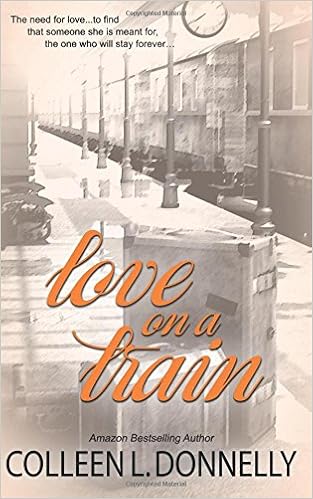
                                

    The moment Martha noticed Raymond on the train, everything her mother warned against erupted – romantic notions, palpitating heart, the desire to write it all in a novel and tell the world. 
    Martha lived and wrote that love story until the day Raymond handed her a sketch. “Want to see a picture of the girl I plan to marry?” The penciled profile resembled Martha… But when Raymond went away, she knew. She wasn’t the girl he planned to marry. 
    David was her father’s apprentice, everything Martha’s mother said made a good husband - hardworking, no romantic tendencies, no tolerance for writing about it. Martha added a fictional happy ending to her and Raymond’s story and published it. Cleansed herself of romantic love, ready to marry David. Until a copy of her book appeared. Full of sketches, Raymond’s version of their love story, drawings that enticed her heart to beat once again.


    I really enjoyed Love on a Train. I won this book in a contest. I usually go for suspense or action romance so it was nice to try something new--a sweet love story. This book is character driven and done beautifully. Martha and Raymond are "star-crossed lovers" or at least crossed by circumstance. You'll root for them until the end. Also, the “story within the story” is woven expertly into the main drama. And wouldn’t we all be lucky to have a steadfast friend like Karen.


About the Author
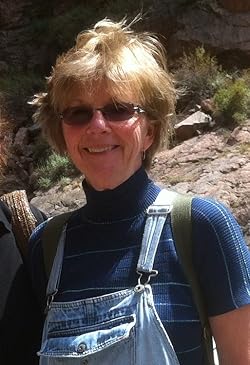
Colleen L Donnelly    Colleen L Donnelly is the author of a Amazon #1 Bestseller in 20th Century Historical Romance "Mine to Tell" which also was the 2014 RomCon Reader's Crown Finalist in Historical Fiction. 

     Her other books include "Sonata Contineo" a self-published novel, "Asked For" a historical women's fiction novel" and her newest novel "Love on a Train" which was released February 5, 2016! 


     She was born, raised, and educated in the Midwestern United States where her scientific schooling and interests eventually led her to other parts of the country. Currently settled back into the Midwest lifestyle, she now enjoys creating characters and places based on what she has lived and seen, then putting them into tales to share.

Monday, August 1, 2016

Cicely Mary Barker's Flower Faeries

  Flower Faeries, one of my favorite wee folk, are immortalized by 
English illustrator Cicely Mary Barker. Unable to go to school as a child because of her epilepsy, she was home-schooled and spent much of her time drawing and painting. 
          
She has been likened to Beatrix Potter for the amazing botanical accuracy of the 170 original illustrations of plants and flowers amidst which her fairies dwell.                                     
Miss Barker's art education began in girlhood with correspondence courses  and instruction at the Croydon School of Art. Her earliest professional work included greeting cards and juvenile magazine illustrations, and her first book, Flower Fairies of the Spring,
was published in 1923. Similar books were published in the following decades. 
   Miss Barker’s enchanting Flower Fairies images were based on real children from Cicely’s sister’s nursery school.                                                   

A devout Anglican, she donated her artworks to Christian fundraisers and missionary organizations, and produced a few Christian-themed books such as The Children’s Book of Hymns. Her painting,
 “Out of Great Tribulation” followed in 1949.

   In 1962, Barker designed a stained glass window for St Edmund’s, Pitlake, in memory of her sister, Dorothy. This church, no longer exists. Although it is known what this window looked like, it appears to have disappeared. Now, there is a good plot point for an upcoming book!


 Her painting of the Christ Child, The Darling of the World Has Come, was purchased by Queen Mary.


 Miss Barker claimed to paint instinctively and rejected artistic theories. She died in 1973, at the age of 77, and although she published Flower Fairy books with spring, summer, and autumn themes, it wasn't until 1985 that a winter collection was assembled from her remaining work and published posthumously.

 Whichever type of faerie strikes your fancy, keep an eye out for them this summer. You might even leave them a treat during the full moon. Just like us, they love to eat tasty snacks. And it tends to make them more benevolent and less mischievous.       


Monday, July 25, 2016

Summertime and Trooping with the Fae.

Summer makes me think of full moons, sultry evenings, and faeries trooping through the woods---especially on a Midsummer's eve. 

 According to poet William Butler Yeats, there are distinctive differences between the trooping, the solitary, and the household fae. 
    Trooping Faeries are technically the "faerie aristocracy," and dressed in their finest garments, they go parading through the woods in what are called Rades. 

    They are, in fact, a faerie court, similar to the Seelie court, and they tend to live in packs. Should one stumbles upon a single trooping faerie, more than likely a few others are around.
           But beware...they can be good... 
                    
                           Or naughty.
                                        
                            Regardless......
They like to party. 

 Solitary Faeries are the opposite of the trooping faeries. They do not care to congregate among their kind. They tend to be a bit more malicious than the trooping faeries, but there are exceptions to this rule. Thus, they are also neither all good nor all bad. 

Lastly, there are the Household Spirits, which are usually found as single entities in a household, but they are not necessarily solitary. Some have been found to be participants in trooping activities.
 This summer, keep an eye out for our Fae friends.


Monday, July 18, 2016

4 Stars for Solace from NetGalley

                   Solace 
     earns 4 STARS from
                     NetGalley!
Here's what reviewer Charlie B said...
I love reading paranormal books.  This one is no different! I finished the book in one day.  Luckily it was my day off when I started reading it. 

It was a good story line right up my alley not only is it paranormal but there is an alpha male and warrior women trying to solve a case.  My one complaint is now I have to wait for the next in the series. 

Inside the book...Read extended excerpt here

                    Pick up your copy of Solace at...
Amazon  
Barnes and Noble 
The Wild Rose Press

                                    Coming Soon

                            
                     Bliss: Fae Warriors Book 2


Monday, July 11, 2016

Running the Gauntlet


An ancient expression still used today. Now a frequently and almost flippantly used term meaning to experience severe criticism or great difficulties, or to have to deal with a lot of people who are criticizing or attacking you.                                        


Once upon a time it meant a painful brutal death as a captive was forced to run between two rows of people repeatedly striking him.  


In this case, the specific use of the word gauntlet has a curious history originating from Swedish word gatlopp. Gata meaning lane and lopp meaning running, so running the lane. The English borrowed the term in the 17th century, probably during the Thirty Years' War featuring English and Swedish soldiers fighting in the Protestant armies.

 Soon its pronunciation was influenced by the unrelated French word gauntlet (meaning an armored glove), and with misuse of the pronunciation so changed the spelling. 


In Ancient Greece, a similar practice, called Xylokopia was used as a severe military punishment, and in the Roman military it was a form of execution by cudgeling.
There was also a naval version of the gauntlet, used in the Royal Navy. This punishment was abolished by order of the British Admiralty in 1806.
  
 Notable literary descriptions of the process appear in Tolstoy's short story After The Ball, Stanley Kubrick's film Barry Lyndon and Ernest Hemingway's For Whom The Bell Tolls.


Several Native American tribes of the Eastern Woodlands culture forced prisoners to run the gauntlet. Some notables included Daniel Boone, Lieutenant-Colonel John B. McClelland, Susanna Willard Johnson.

          Here's hoping you never truly Run the Gauntlet.


Tuesday, July 5, 2016

Those Wacky Wombats, a big hit in Victorian Times.

                                  No, not the rock group... 


the common wombat, which is 
the largest burrowing mammal in existence, and the second largest marsupial. Nocturnal and solitary, they spend most of the day below ground, so it's rare for humans to spot one in the wild. 

Wombats live in the forests, mountains, and heathland in 
Australia, including Tasmania, and central Queensland. The northern species is classified as Critically Endangered.


These chubby darlings, can grow as large as 47 inches in length, weighing 80 pounds.


Wombats have long flat claws that give them a shuffling gait but make them extremely efficient burrowers.
                        click here for baby wombat running!

    They may have up to 12 burrows with a network of sub-tunnels, including multiple entrances/exits, and places places to sleep.                                          Sounds like a hobbit house!
     A group of wombats is called a wisdom, a mob, or a colony.                                                                  
     After a gestation period of only 3 weeks, female wombats give birth to one baby, called a joey. Tiny and undeveloped, the joey crawls into their mother's pouch
 immediately where they remain for about 5 months. 


The mother's unique backward pouch prevents the baby from being covered in dirt and debris as the Mother is digging and burrowing. 


Wild wombats live an average of 5 years. 
In captivity, they can live up to 30 years. 


After 1803, a steady trickle of live wombats reached Europe. There was a wombat among the birds and
animals delivered to the menagerie of the Empress Joséphine Bonaparte at Malmaison.        
        The establishment of the wombat’s Victorian reputation took off with the appearance in 1855 of John Gould’s The Mammals of Australia. And in September 1869, the great artist Dante Gabriel Rossetti bought the first of two pet wombats. 
 He was quite distraught over their passing. 
                                                      
  The wombat diet consists primarily of grasses, sedges, herbs, bark, and roots. And with their unusually slow metabolism — it takes them from 8 to 14 days to digest their meals. Maybe that's why their output is SQUARE. 
               To mark their territory, they leave piles of square                               poohs, even stacking them in prominent places. 

    Threats to wombats include loss of habitat, competition with other animals for food, rabbit poisons, hunting, and road accidents. Adult wombats are preyed upon by dingoes, foxes, and Tasmanian devils. Younger wombats are also prey for eagles, owls and quolls
               Apparently, they are also great fans of the Beatles. 

                               
                                           See ya, wouldn't want to be ya.