Monday, July 29, 2019

The Unicorn of the Rain Forest

The mysterious okapi remained a legend to Western scientist until 1900.
Also known as the forest giraffes, they have the body of a horse, striped legs like a zebra, and the males have two small skin covered horns which when seen from the side gave rise to the unicorn fantasy.
Generally solitary and territorial, the Okapi has a thick oily fur that keeps them dry when it rains, and in addition to being a great utensil for eating, their prehensile tongue is a remarkable tool for grooming and is so long they can reach their eyes and ears with it.
           They have scent glands on their feet that spread sticky, tar-like territory markings to alert others of their region. An okapi can eat between 45 and 60 lbs. of vegetation each day, but clay from riverbeds is also important to their diet for minerals and salt.               
     These wonderful African animals are native to the Democratic Republic of Congo and are typically found within the dense Ituri Rain Forest. Once found in Uganda, they are now extinct there.   
After a gestation period of 14-16 months, female okapis typically only give birth to one baby at a time. 


The okapi is listed as endangered because of the rate of population had decline severely. As usual this is due to human habitation and hunting.

Although known to make coughs, bleats and whistles, Okapi are not noted for any distinctive call. However Mothers have an amazing gift of communicating with their calves by infra-sound noises falling below the normal limits of human hearing.
To this day, the Okapi continues to interest and baffle scientist due to its atypical chromosome count. Some had 46 per cell some 44 or 45. Yet they appear normal physically as do their offspring.

Monday, July 15, 2019

The real Captain Jack:This one got caught.


Captain John Rackham, known as Calico Jack (because of the calico clothing he wore) was an English pirate operating in the Bahamas and in Cuba during the early 18th century.
  

 John (Calico Jack) began his seafaring days as quartermaster on Charles Vane's brigantine Ranger in 1718. They operated out of New Providence island in the Bahamas, which was so notorious a base for pirates it was known as the "Pirates' Republic". 

    Vane and his crew robbed several ships outside New York City, then encountered a large French man-of-war. Because Vane refused to fight the man-or-war he was branded a coward, and Rackham demanded a vote from the crew in which Vane lost and was put off the ship, thus making Rackham Captain. 
                              Related image
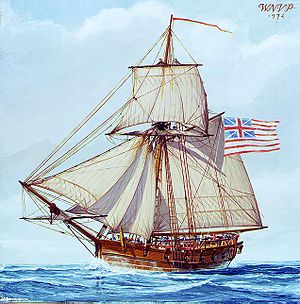
     While in Cuba, Calico Jack captured and English sloop being held by the Spanish. Active towards the end of the "Golden Age of Piracy" (which lasted from 1650 to 1730) he sailed the ship to Nassau and accepted a pardon for his crimes 1719 .  But having a penchant for adventure, he was soon again on the wrong side of the law.
                       Image result for image rackham's cay bahamas
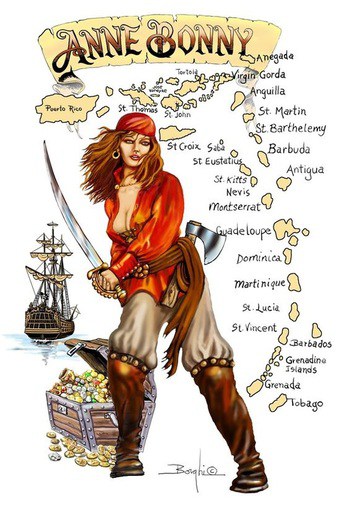
       While in Nassau, Jack met Anne Bonny, who was married to James Bonny at the time. Anne had been refused a divorce and whipped based on charges of adultery. Seeing no alternative, she ran away with Captain Jack, and their new crew which included Mary Read, who had come aboard disguised as a man. Calico Jack Rackham's pardon was voided when they stole a sloop belonging to John Ham.
                       Image result for image anne bonny pirate
    After a short run, Captain Jack Rackham was captured by Royal Navy pirate hunter Jonathan Barnet. In 1720, he was put on trial in Jamaica, and was hanged in November of that year in Port Royal. His body was gibbeted and put on display at a main entrance to Port Royal now known as Rackham's Cay.

              Related image

    Anne Bonny and Mary Read both claimed to be pregnant at their trials,  and so were given a temporary stay. Mary Read died in April 1721, most likely of fever related to childbirth. There is no historical record of Bonny's release or of her execution.

Although art might imitate real life, Captain Calico Jack, didn't have the screenplay luck of Captain Jack 
Sparrow.


Sunday, June 30, 2019

Cowboys, Cattle, and Cutthroats /Colorado Romance Writers finalist!

Thank you Colorado Romance Writers 
and the Wild Rose Press,
 (especially my editor Amanda Barnett). 
Keep on dancing. 

                        Both seek retribution, 
                     neither is looking for love.
                                
   Ochessa is heartbroken when she finds her brother fatally wounded. His dying words are about a childhood puzzle box, missing legal documents, and a drifter named Nicodemus Breedlove. Ochessa vows to find Will’s murderer—and the man Will described.

    No stranger to trouble, Nic's only concerns are his Stetson, his mule Sadie, and a long awaited chance at retribution. After gaining Ochessa’s trust, and taking the job she offers, life gets more complicated. 

    Back on the ranch in Colorado, Ochessa works as hard as any man. Then Nick tempts her into playing even harder as a woman—both are overwhelmed by their growing love for one another.

    Weathering a stampede, a gully washer, and a pack of outlaws, they locate the killer. As Nic’s quest for justice, and Ochessa’s vendetta for Will playout, bullets fly...                                
       Not everybody’s gonna make it out alive.

Available in paperback and e-book at....

Excerpt:
“I’ve come for the job,” Nic said.
Ochessa hesitated only a moment. “I don’t need any more ranch hands.”
“Not a job, the job.” Nic retrieved the bounty poster from inside his shirt, leaned forward, and held it up in front of her face.
Of course. Naturally he would be offering a gun for hire, not a strong back for bending.
Re-folding the paper, he tucked it away in his back pocket. Several similar fliers were poking out of his saddlebag. He must have collected all the ones she tacked up in town.
“It doesn’t say anything about expenses,” he continued.
“That’s because I don’t intend to pay any.”
“That should narrow down the applicants considerably.” His gaze settled on her lips. “Or are you planning to offer incentive of a more personal nature?”
“Listen, Breedlove. Don’t get your hopes up—or anything else. Whoever I hire can live and eat at the ranch for free. And they can stay at Will’s cabin if the search takes them back to Kansas.”
He seemed disappointed. She didn’t care, or at least she shouldn’t care. What this man thought held no consequence for her. Being a drifter, he would most likely ride out of her life as quickly and unexpectedly as he’d galloped into it.
“Well…” Nic urged the mule one step closer.
“Well, what?”
“Do I get the job or not?”


Monday, June 10, 2019

Female Viking Warrior no longer a myth


In the Viking Age, the 8th to the late 10th century, the town of Birka, Sweden was a key center for trade, most likely offering furs and iron goods as well
as craft products in exchange for various materials from much of Europe and western Asia.

Founded around AD 750, Birka flourished for more than 200  years with and estimated population between 500 and 1000 people.
  By the early middle ages, there were narratives about fierce female Vikings fighting alongside men. Although, reoccurring in art as well as in poetry, the women warriors were generally dismissed as mythological phenomena.

                                UNTIL NOW!
     The entombed skeleton in question was discovered 128 years ago in Birka. Surrounded by military weapons, it was assumed to be that of a battle-hardened male. 

The artifacts entombed with the 1,000-year-old bones and unearthed in 1889 included two shields,
a sword, an ax, a spear, armor-piercing arrows and a battle knife - not to mention the remnants of two horses, one mare and one stallion. Also a full set of gaming pieces indicating knowledge of tactics and strategy stressing the buried individual's role as a high‐ranking officer.

Now, modern-day genetics testing on the DNA extracted from a tooth and an arm bone has confirmed the skeleton, known as Bj 581, belongs to someone with two X chromosomes. In other words, a female.
The dental wear of the lower molars was clear but moderate, suggesting the individual was at least above 30 years of age.

The female warrior, was probably of nonlocal origin and, had moved to Birka. This assumption is based on
her genetic affinity to present‐day inhabitants of the British Islands (England and Scotland), the North Atlantic Islands (Iceland and the Orkneys), Scandinavia (Denmark and Norway) and to lesser extent Eastern Baltic Europe (Lithuania and Latvia) 

Major arguments against the grave belonging to a woman are that she just happened to live like a man, or when someone buried her, what she was buried with might not have been of her choosing. 

Poppycock! I believe she was a true Viking Warrior. What do you think?

More than 3,000 Viking graves have been discovered encircling Birka, but only about 1,100 have been excavated.

For more details and sites used to glean the above information, go to...
https://onlinelibrary.wiley.com/doi/full/10.1002/ajpa.23308
https://www.grandforksherald.com/news/4327867-viking-warrior-skeleton-identified-female-128-years-after-its-discovery


Looking for a romantic Medieval adventure? Try my book IRON HEART, rated 5 Hearts from Sizzling Hot Books “Iron Heart gives the classic epic adventures a run for their money.” 

England: circa. 879 A.D.
    With the heart of a warrior and the soul of a poet, Faran Kilbraun travels far from home in search of the sword and shield of his ancestors. Protecting the ancient relics was his responsibility. Now, to regain his honor, he must recover the stolen artifacts and battle a life-long enemy.  

    Following the accidental death of her cruel husband, Leanora Wrenn is wrongly accused of his murder. Forced into exile, a small north shore island becomes her lonely refuge—exoneration her only hope. 

     When Faran discovers Leanora's remote sanctuary, both their lives are changed forever. Comrades-in-arms, they fight side by side for their chance at redemption and love. 


Buy at Amazon
Amazon Author Page
Visit me at Facebook


Sunday, May 26, 2019

     Saint Walstan, the patron-saint of farmers, farmhands, haymakers, herdsmen, farms and farm animals, is often in my thoughts as I trim hooves, mow the pasture, or put up fences!  
                                   An Orthodox icon of St. Walstan of Bawburgh
According to legend, St.Walstan was born around 975 A.D. to Benedict and Blide, nobles related to the Royal Family. 
                             Image result for images stack of medieval books library
 His parents, who possessed a library, fostered little Walstan's love of reading. He especially liked the Holy Scriptures, impressed by the verse in the Gospel of Luke, Whosoever that forsaketh not all that he hath, he cannot be My disciple. Walstan decided, at the early age of seven, to renounce all, for the love of God. 
                                  Image result for image peasant child
   Shortly before his thirteenth birthday, he told his parents that he must leave their home forever. Warned by an angel in a dream of their son’s destiny, Benedict and Blide consented to his wish, though they grieved in their hearts

                           Image result for image east anglia
   Known as Walstan the Generous, he lived in county Norfolk, which lies in East Anglia, bordered by the North Sea to the east and the north. In his travels he gave away all his worldly possessions and dressed like a beggar. 

              Photo: tournorfolk.co.uk
                                      photo: tournorfolk.co.uk
   A man named Nalga who owned a large farm offered Walstan work, and this young man of God became a farmhand working on Nalga’s lands until the end of his life 
Image result for image white calf   The only gift of remuneration he would accept from Nalga were two white calves and a wagon as an angel had commanded him to do so. 
A picture of St. Walstan and an angel inside the garden room near the Our Lady and St. Walstan's RC Church in Costessey, Norfolk (provided by rector of RC church, Costessey)
    When he died, in 1016, he was placed on the wagon, and God guided the calves. When they stopped three times in their travels, holy springs with clear water gushed forth at each place...Taverham, Costessey, and Bawburgh.

  During his life he healed many peasants and animals, and after his death the water from the three wells and the surrounding moss is said to have healed many more beasts and humans.

His sites remained destinations of pilgrimage until the Reformation, when his relics were destroyed in 1538. But the villagers of East Anglia never forgot him and continue to this day to flock to his holy wells.
 
St. Walstan's well in Bawburgh, Norfolk (source - Evelyn Simak from
  St. Walstan's Day is celebrated each year on the nearest Sunday to May 30 (his feast according to the old calendar)
                       Church of Sts. Mary and Walstan in Bawburgh, Norfolk


Monday, May 20, 2019

Ladybug, Ladybug fly away home, a Medieval poem


         The Ladybug, has a fascinating history. There are about 500 species in the United States, and 6,000 different species around the world.
               
How it got its name: In Europe, during the Middle Ages, swarms of insects were destroying the crops. The farmers prayed to the Virgin Mary for help. Soon thereafter, the Ladybugs came, devouring the plant-destroying pests and saving the crops! 
               Image result for image medieval farmers
 The farmers called these beautiful insects "The Beetles of Our Lady", and eventually they became popularly known as "Lady Beetles".  Ladybugs go by a few different names, including: Ladybirds, Ladybugs, Lady beetles and Lady cows.
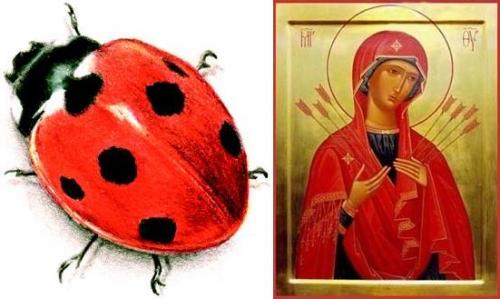
          The name “ladybird” originated in the Middle Ages when the insects were known as the “beetle of Our Lady”. They were named after the Virgin Mary, who in early religious paintings was often shown wearing a red cloak. The spots of the seven spot...
The red wings were said to represent the Virgin's cloak ,and the black spots were symbolic of her seven joys and seven sorrows.
                          
"Ladybug, ladybug fly away home,
Your house in on fire and your children are gone"
Also in Medieval England, the farmers would set torches to the old Hop vines after the harvest, to clear the fields for the next planting. The poem was a warning to the aphid-eating Ladybugs, still crawling on the vines in search of aphids. 

  All ladybugs are less than ¼ inch long, oval or round shaped, and have six short
legs. ... Sometimes, the ladybug will be a solid color with no pattern at all, and can be yellow, brown, or black. These colors and patterns are thought to warn predators of the ladybug’s bad taste and poison.
   They can have as many as 16 spots, and some ladybugs have no spots at all. Both male and female Ladybugs have spots, and can eat up to 50 aphids a day!

Image result for images california citrus growersIn the 1880's, California, a destructive scale insect was killing large groves of lemon and orange groves. The orchard owners released thousands of Australian Ladybugs with the hopes that they would gain the upper hand. Within 2 years the scale insect infestation was conquered and the trees began to bear fruit again.  The Ladybugs had singlehandedly saved an entire industry (worth half a billion dollars today).
Quite the Superhero 

Ladybugs are great garden predators. Here are six “bad bugs” they’ll eat:Aphids, Mites, Whiteflies, Scale insects, Mealybugs, Thrips

Flowers that attract ladybugs are:
Angelica, Calendula, Caraway, Chives, Coriander, Cosmos, Dill, Fennel, Feverfew, Marigold, Statice, Sweet Alyssum, Yarrow
                             
LADYBUG LEGENDS:
    Nearly ALL cultures believe that a Ladybug is lucky. Killing one is said to bring sadness and misfortune. 

    In France, if a Ladybug landed on you, whatever ailment you had would fly away with the Ladybug.


    In Belgium, people believed that if a Ladybug crawled across a young girl's hand, she would be married within a year. 

    People in Switzerland told their young children  
    that they were brought to them, as babies, by Ladybugs. (...and we thought Storks did that)!

    In some Asian cultures, it is believed that the
Ladybug understands human language, and has been blessed by God, Himself.


According to a Norse legend, the Ladybug came to earth riding on a bolt of lightning.
    
    The Victorians in Britain believed that if a Ladybug alighted on your hand, you would be receiving new gloves.....if it landed on your head, 
 a new hat would be in your future, and so on.

    In the 1800's, some doctors used Ladybugs to treat measles!  They also believed that if you mashed ladybugs (ewww!) and put them into a cavity, the insects would stop a toothache!

    During the Pioneer days, if a family found a Ladybug in their log cabin during the winter, it was considered a "Good Omen".

       In Norway, if a man and a woman spot a Ladybug at the same time, there will be a romance between them.

"LADYBUG" IN OTHER LANGUAGES:
"Glückskäfer" -- Austria 
"Slunécko" - Czechoslovakia  
"Mariehøne" -- Denmark  
"LadyBird" -- England 
"Leppäkerttu" -- Finland  
"Coccinelle" -- France  
"Marienkafer" -- Germany  
"Paskalitsa" -- Greece  
"Parat Moshe Rabenu" -- Hebrew 
"Lieveheersbeestje" -- Holland  
"Katicabogár" -- Hungary  
"Coccinella" -- Italy  
"Tentou Mushi" -- Japan  
"Da'asouqah" -- Jordan  
"Mudangbule" -- Korea  
"Mara" -- Latvia  
"Kumbang" -- Malaysia   
"Mariehøne" -- Norway
"Biedronka" -- Poland  
"Joaninha" -- Portugal  
"Buburuzã" -- Romania  
"Bosya Kopovka" -- Russia  
"Pikapolonica" -- Slovania  
"Mariquita" -- Spain  
"Nykelpiga" -- Sweden  
"Ugurböcegi" -- Turkey  
"Ladybug" -- United States  
"Ilsikazana Esincane" -- Zulu